Fiche de MEYER Michel
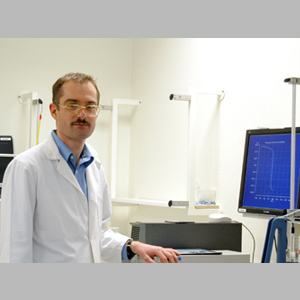
| Adresse : | ICMUB Institut de Chimie Moléculaire de l'Université de Bourgogne Bât. MIRANDE - Aille B - Bureau B-R27C 9 Avenue Alain Savary 21000 Dijon – France |
| Tél : | (+33) 380 393 716 |
| E-mail : | michel.meyer@ube.fr |
| Equipe : | EMCAP |
| Fonction | Chargé de recherches CNRS (HDR) |
| Tags : | Chimie de Coordination, Chimie Macrocyclique, Imagerie Moléculaire |
| ORCID ID : | 0000-0003-2295-7826 |
- Carrière
- Projet
- Publications
- Communications
- Enseignement Compétences et Administration
| 2019- | Chargé de Recherche CNRS Hors Classe affecté à l’ICMUB (UMR 6302 – Dir. : Pr. F. DENAT) |
| 2007-2019 | Chargé de Recherche CNRS de Classe Normale affecté à l’ICMUB (UMR 6302 – Dir. : Pr. F. DENAT) |
| 2001-2007 | Chargé de Recherche CNRS 1ère Classe affecté au LIMSAG (UMR 5633 – Dir. : Pr. R. GUILARD) |
| 1997-2001 | Chargé de Recherche CNRS 2ème Classe affecté au LIMSAG (UMR 5633 – Dir. : Pr. R. GUILARD) |
| 1997 | Assistant à l’Université de Neuchâtel (Suisse) et collaborateur scientifique du Pr. K. BERNAUER |
| 1995-1997 | Stagiaire post-doctorant, Pr. K. N. RAYMOND, University of California, Berkeley (USA) |
| 1991-1995 | Doctorant au Laboratoire de Physico-Chimie Bioinorganique, Dr A. M. ALBRECHT-GARY, Université L. Pasteur de Strasbourg |
DIPLÔMES
| 2008 | Habilitation à Diriger des Recherches, Université de Bourgogne |
| 1995 | Doctorat, Université Louis Pasteur de Strasbourg |
Coordinateur du projet ANR PLUTON (2018/21)
Sélection de publications
Azide Binding Controlled by Steric Interactions in Second Sphere. Synthesis, Crystal Structure, and Magnetic Properties of [NiII2(L)(μ1,1-N3)][ClO4] (L = Macrocyclic N6S2 Ligand).
A. Jeremies, S. Gruschinski, M. Meyer*, V. Matulis, O. A. Ivashkevich, K. Kobalz, B. Kersting*, Inorg. Chem. 2016, 55, 1843-1853.
A Comparative IRMPD and DFT Study of Fe3+ and UO22+ Complexation with N-Methylacetohydroxamic Acid.
T. Terencio, J. Roithová*, S. Brandès, Y. Rousselin, M.-J. Penouilh, M. Meyer*, Inorg. Chem. 2018, 57, 1125-1135.
Effects of preorganization in the chelation of UO22+ by hydroxamate ligands: cyclic PIPO– vs linear NMA–.
A. Sornosa-Ten, P. Jewula, T. Fodor, S. Brandès, V. Sladkov, Y. Rousselin, C. Stern, J.-C. Chambron*, M. Meyer*, New J. Chem. 2018, 42, 7765-7779.
Liste de publications
Sélection de quelques conférences invitées et keynotes:
Chelation of toxic metals: from fundamental advances in macrocyclic chemistry to extracting materials.
M. Meyer, XX Mendeleev Congress on General and Applied Chemistry, 26-30 September 2016, Ekaterinburg, Russia.
Physico-chemical validation of model chelators as a first step towards the design of radiopharmaceuticals employed in SPECT or PET imaging.
M. Meyer, 3rd Summer School of Bioinorganic Medicinal Chemistry, 29 août-1 September 2017, Cagliari, Italy.
Actinide chelation by hydroxamic siderophores: from solution to soil studies.
M. Meyer, 10th International Symposium on Nano and Supramolecular Chemistry (ISNSC 2018), 9-12 July 2018, Dresden, Germany.
Enseignement
Master 2ème année mention Chimie, parcours « Molecular chemistry and Metals for Health and sustainable Development » (MMHD) de l’Université de Bourgogne–Franche-Comté.
Aspects thermodynamiques de la complexation en phase homogène (16h / an)
Masters 1ère année « Contrôle et Analyse Chimique » (CAC) et « Qualité, Environnement et Sécurité dans l’Industrie et les Services » (QESIS) de Bourgogne–Franche-Comté.
Introduction à la spectrométrie d’émission atomique par plasma à couplage inductif.
Compétences
• Caractérisation structurale, thermodynamique et cinétique des équilibres de formation et de dissociation de complexes métalliques en solution ;
• Chimie de coordination des éléments f par des sidérochélates bactériens et abiotiques ;
• Développement et étude de chélateurs pour des applications en imagerie médicale nucléaire par émission de positrons ;
• Développement de détecteurs optiques de cations toxiques (e. g. Cu, Pb, Cd, Hg) ;
• Chimie analytique (potentiométrie, spectrophotométrie, spectrométrie d’émission atomique)
Administration
Institut de Chimie Moléculaire de l’Université de Bourgogne (ICMUB, UMR 6302) :
- Membre du directoire depuis 2017.
- Responsable adjoint de l’équipe P2DA depuis 2012.
- Membre nommé du Conseil de Laboratoire depuis 2012.
- Personne Compétente en Radioprotection (agrémenté 2010/25).
Institut Pluridisciplinaire Hubert Curien de Strasbourg (IPHC, UMR 7178) : membre nommé du Conseil Scientifique depuis 2011.
Groupe de Recherche « Prométhée » (GDR CNRS 3749) : membre élu du Conseil Scientifique dudepuis 2016.
Action COST CA 18202 « Network for Equilibria and Chemical Thermodynamics Advanced Research » : membre titutlaire du Comité de Pilotage depuis 2019.
Conseil National des Universités (CNU) : membre titulaire nommé en 31ème section (2011/15).
Commission de Spécialistes de l’Université de Bourgogne (sections n° 31, 32, 33) : membre élu (2002/04).
Bureau de la Commission de Proposition de l’Université de Bourgogne (sections n° 31, 32, 33) : membre (2010/19) et vice-président (2011/14).
Conseil du Département de Chimie de l’Université de Bourgogne : membre élu (2003/07, 2011/13, 2015/17).
Section régionale Bourgogne–Franche-Comté de la Société Chimique de France : trésorier depuis 2019 et trésorier adjoint (2015/19).
Société Chimique de France (division Chimie de Coordination) : membre de depuis 1998.